Your software does not know your business. It only knows patterns.
AI expense categorization for small business sorts your bank and card charges into expense accounts. It saves hours of data entry. But AI can make mistakes and it often guesses. And when it guesses wrong, your books are wrong. And so is your tax return and that can lead to costly penalties, liens, and levies.
This guide explains how the process works. It shows where the errors come from and give you a simple plan to fix them.
What Is AI Expense Categorization?
AI expense categorization is software that reads each transaction and assigns it to an account in your books. Office supplies go to one account. Gas goes to another. Software fees go to a third.
The software learns from your past choices. Over time, it gets faster but it doesn’t always get more accurate. And speed is not the same as accuracy.
How Does AI Automated Expense Categorization Work?
Most bookkeeping tools follow the same basic steps. QuickBooks Online and similar programs work this way.
Step 1: It Pulls in Your Transactions
You connect your bank and credit card accounts. The software downloads each charge through a bank feed. New charges come in every day or so.
Step 2: It Reads the Details
The software looks at the payee name, the amount, the date, and the memo. Card charges also carry a merchant code. That code tells the software what type of store made the sale.
Step 3: It Looks for Patterns
The software compares the charge to your history. It checks any rules you set up. Some tools also compare the charge to patterns from other users.
Step 4: It Suggests or Assigns a Category
Some tools wait for you to approve each suggestion. Others post the charge on their own. And you need to know which setting your software uses.
Step 5: It Learns from You
Each time you accept or change a category, the software takes note. Good choices teach good habits. Wrong choices teach wrong habits.
Why Does AI Get Expense Categories Wrong?
The software sees the charge. It does not see the reason for the charge. And this gap causes most errors.
Here are the most common causes:
- One store sells many things. A single warehouse club trip might include printer paper, snacks for clients, and groceries for home.
- The same vendor serves different purposes. A gas station charge could be fuel, a meal, or a car wash.
- Personal charges land on business cards. The software assumes every charge on a business card is a business expense.
- Money moves between your own accounts. Transfers and card payments can look like new spending.
- Big purchases look like small ones. The software may not know that a laptop should be treated as equipment.
- Past mistakes repeat. One wrong approval can become a habit the software copies every month.
Context is the one thing the software cannot download.
What Are the Most Common AI Categorization Errors?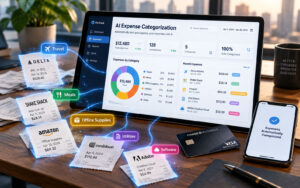
These errors show up again and again when we review books coded by software.
Owner Draws Posted as Expenses
Money you take out for yourself is not a business expense for a sole owner. When the software codes it as an expense, your profit looks lower than it is.
Full Loan Payments Posted as Expenses
A loan payment has two parts. The interest is an expense. The principal lowers the loan balance. The software often codes the whole payment as an expense.
Transfers Counted as Income or Spending
Moving money from savings to checking is not income. Paying your credit card bill is not a new expense. Both errors can distort your numbers.
Equipment Posted as Supplies
The IRS offers a de minimis safe harbor election. It lets many small businesses deduct items that cost $2,500 or less per invoice or item. Larger items often must be recorded as assets and depreciated. You can read more on the IRS tangible property regulations page.
Meals Mixed with Entertainment
Business meals are generally 50 percent deductible. But entertainment is generally not deductible. The software often puts both in the same account. IRS Publication 463 explains the meal rules.
Refunds Posted as Income
A refund should reduce the original expense. When the software codes it as sales, your income looks higher than it is.
Duplicate Transactions
A charge may come in through the bank feed and also get entered by hand. Now it shows up twice.
A category is a tax decision and typically based on the Schedule C. Each expense account in your books flows to your tax return. A wrong category can mean a wrong return.
And even small coding errors can lead to big IRS problems.
How Do You Fix AI Categorization Errors?
You do not need to stop using AI. You need a review habit. Follow these steps.
- Review new transactions every week. Short weekly reviews catch errors before they spread.
- Check the uncategorized accounts first. Charges the software could not place often hide there.
- Look closely at stores that sell many things. Split those charges into the right accounts.
- Fix the rule, not just the charge. If one rule causes the same error each month, change the rule.
- Match loan payments to your loan statement. Split each payment into interest and principal.
- Keep business and personal spending apart. Use separate accounts and cards for the business.
- Save your receipts. The receipt shows what you bought. The bank feed does not.
- Reconcile every account each month. Match your books to your bank and card statements.
- Have a professional review your books before year end. Fixing errors before filing is easier than fixing them after.
IRS Publication 583 explains why a separate business account and good records matter. The IRS recordkeeping page lists the records you should keep.
A few minutes each week saves hours at tax time.
What Should You Avoid?
These habits cause the most damage in AI coded books.
-
- Do not click accept on every suggestion without reading it.
- Do not use your business card for personal purchases.
- Do not leave charges in an uncategorized account.
- Do not delete a charge just because you do not recognize it.
- Do not create a new rule for every single vendor.
- Do not wait until tax season to review your books.
Each of these habits trains the software to repeat the mistake.
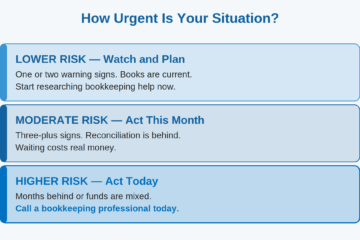
How Serious Is Your Categorization Problem?
Use this scale to check where you stand.
Lower Risk
You review new charges each week. You reconcile each month. You find only a few errors. The stakes are small. Keep your review habit and fix any rules that cause repeat errors.
Moderate Risk
You have not reviewed your books in a few months. Your uncategorized accounts have a large balance. Personal and business charges are mixed. Your profit numbers may be wrong. That affects your estimated tax payments. Schedule a bookkeeping cleanup before your next estimated payment is due.
Higher Risk
Your books have gone a year or more without review. You filed a tax return from books you never checked. A lender or the IRS has asked for your records. Your return may be wrong. Errors like these can lead to penalties or a denied loan. Call Simple Finances™ today at 219-213-3550
Your books have gone a year or more without review. You filed a tax return from books you never checked. A lender or the IRS has asked for your records. Your return may be wrong. Errors like these can lead to penalties or a denied loan. Call Simple Finances™ today at 219-213-3550 or book a discovery call.
.
The longer errors sit, the harder they are to unwind.
Is AI Expense Categorization for Small Business Right for You?
AI expense categorization for small business works well for many owners. It works best when a person checks the results.
It Is a Good Fit If
- Most of your charges come from the same vendors each month.
- Your business and personal accounts are separate.
- Someone reviews the results every week.
- Your business does not carry inventory or run payroll through the same books.
You Need More Help If
- Your business and personal spending are mixed.
- You buy equipment, vehicles, or other large assets.
- You carry inventory or run payroll.
- You own more than one business.
- You are months behind on your books.
AI can sort your expenses. It cannot sign your tax return. You are responsible for what your books say.
The software is a tool. You still need a bookkeeper to keep you tax compliant.
Why Work with Simple Finances™?
Enrolled Agents at Simple Finances™ review AI coded books every day. Our team includes a Gold QuickBooks ProAdvisor. We know how the software makes its choices. We also know how those choices show up on a tax return.
We help owners set up clean rules, fix past errors, and build a review routine that sticks. That makes AI expense categorization for small business work the way it should.
Clean books start with the right setup.
Schedule Your Bookkeeping Discovery Call
Click the button below to schedule your Bookkeeping Discovery Call. Pick a time on the calendar that works for you. On the call, we talk about your needs and current bookkeeping and tax problems and we give you a plan to solve them.