National Slam the Scam Day: The IRS 2026 Dirty Dozen List
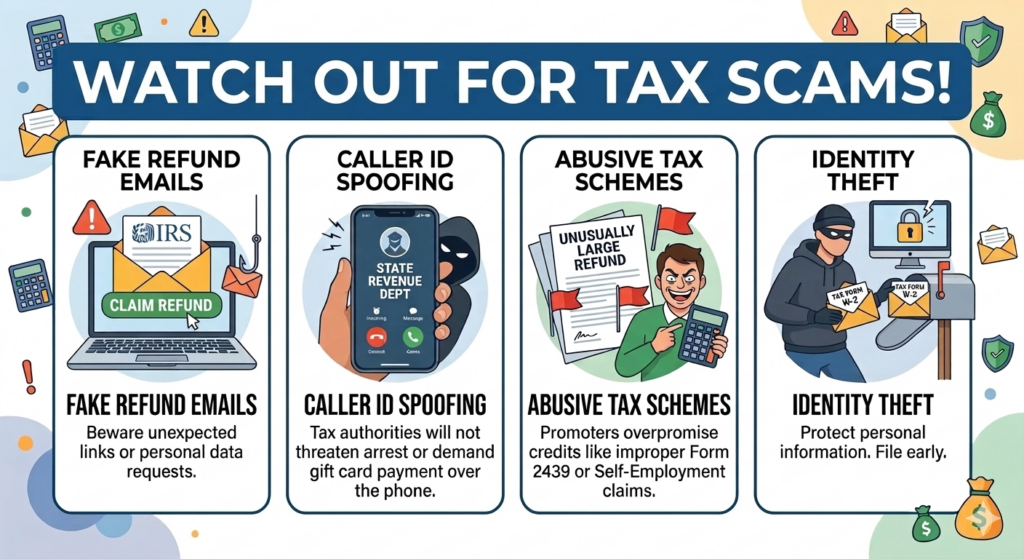
The theme is consistent every year: criminals create urgency, impersonate authority, and push you into fast action before you verify facts. What’s different in 2026 is the acceleration of AI-enabled impersonation (voice mimicry, caller-ID spoofing, realistic robocalls) and a new scam category the IRS is seeing more often: abusive refund claims tied to Form 2439 (undistributed long-term capital gains).
The 2026 Dirty Dozen Red Flags & Practical Defenses
- IRS impersonation by email and text (phishing + smishing): Scammers send emails, texts, and DMs that look official and sound urgent. Many include QR codes or links that send you to a fake “IRS” page to “verify” your account or “claim” a refund. Some links can also install malware, including ransomware.
Red flags: Unexpected messages, QR codes, shortened links, attachments, threats, “verify now” language.
Defense: Don’t click; don’t scan; go to official websites by typing them yourself; treat all surprise “IRS” messages as hostile until proven otherwise. - AI-enabled IRS impersonation by phone (robocalls, voice mimicry, spoofed caller ID): Phone scams are no longer obvious. Caller ID can be spoofed to look legitimate. AI voice tools can make the caller sound calm, professional, and “real.” The classic tactics are still there: fear, urgency, and immediate payment demands.
Red flags: “Pay immediately,” threats of arrest, pressure to stay on the line, payment by gift card/wire/crypto.
Defense: Hang up; independently verify through trusted channels you find yourself (not numbers provided by the caller). - Fake charities: Fraudsters exploit disasters and tragedies by creating fake charities to collect donations and personal information. Even well-meaning donors can end up funding criminals and exposing identity data.
Red flags: Emotional pressure, vague mission, no clear leadership, refusal to provide documentation, unusual payment requests.
Defense: Verify the organization before donating; don’t share sensitive data to “process” a donation. - Misleading tax advice on social media: Viral “tax hacks” can push people into filing false returns or claiming credits they don’t qualify for. This can trigger refund delays, audits, penalties, and potentially criminal exposure if the filing is knowingly fraudulent.
Red flags: “Everyone qualifies,” “guaranteed refund,” “no documentation needed,” “the IRS can’t track this.”
Defense: Validate any “hack” with a credentialed professional or official guidance before putting it on a tax return. - Identity theft involving online tax account access: Criminals try to use stolen identity information to access or create online tax accounts. Others pose as “helpers” offering to set up your account—so they can capture your login details and verification codes.
Red flags: Unsolicited “help,” requests for your one-time passcodes, asking for ID documents by text/email.
Defense: Create accounts only through official portals; never share verification codes; treat any third-party “account setup help” you didn’t request as suspicious. - Abusive undistributed long-term capital gains claims (Form 2439 abuse): This is the notable 2026 addition. Form 2439 can be legitimate in narrow cases (certain investment funds or real estate trusts), but scammers are pushing overstated or fabricated 2439 claims to generate refundable credits. Some schemes even falsely tie claims to well-known organizations.
Red flags: You’re told you “qualify” but you never received a real Form 2439; paperwork doesn’t match your brokerage/tax documents; entities you don’t recognize.
Defense: If you did not receive Form 2439 through a legitimate investment reporting process, do not claim it. Expect heightened scrutiny on questionable claims. - Bogus “Self-Employment Tax Credit” promotion: Promoters market a broad “self-employment tax credit” as if it’s widely available and easy. Many taxpayers do not qualify, and improper claims can lead to audits, repayment, and penalties.
Red flags: Promoter certainty without reviewing facts, refund-based fees, “easy money” framing.
Defense: Confirm eligibility before filing; avoid refund-percentage arrangements and “claim it now” marketing. - Ghost preparers: A ghost preparer prepares a return but refuses to sign it and/or refuses to include a PTIN. That’s a major warning sign because the taxpayer is still legally responsible for what gets filed.
Red flags: Preparer won’t sign, won’t provide a PTIN, asks you to sign a blank/incomplete return, pushes “maximum refund.”
Defense: Use reputable preparers who sign the return; never sign a blank return; review everything before filing. - Non-cash charitable contribution schemes: Some promoters encourage inflated appraisals for donated property (including certain conservation easement and art-related schemes), promising dramatic tax reductions. The risk is high when valuations are exaggerated or manufactured.
Red flags: “Guaranteed write-off,” appraisal values that feel detached from market reality, promoter-driven valuation process.
Defense: Require credible, independent valuation support and documentation; be cautious of “too perfect” outcomes. - Overstated withholding schemes (fabricated wage/withholding data): This refund-fraud tactic involves inflating withholding amounts to manufacture a larger refund while reporting low or zero income. These claims often get delayed while verified, and false filings can lead to penalties and enforcement action. Variants can show up across different tax forms, not just W-2s.
Red flags: “Report zero income but high withholding,” “other withholding” tricks, forms that don’t match source documents.
Defense: Only report withholding shown on actual, legitimate documents; reconcile totals carefully before filing. - Spear-phishing and malware campaigns targeting tax professionals: Tax firms are prime targets because one breach can expose many client files. Scammers send “new client” emails or “document request” messages containing malicious links or attachments.
Red flags: Odd sender domains, urgent tone, unexpected attachments, links to unfamiliar file-sharing sites, mismatched names/signatures.
Defense: Verify new-client requests out-of-band; use MFA; train staff; lock down permissions; treat inbound attachments/links as high risk. - Aggressive or misleading Offer in Compromise marketing (“OIC mills”): Offer in Compromise is real, but “OIC mills” overpromise outcomes and charge high fees to people who don’t qualify. The harm is usually financial (big fees) and procedural (wasted time while penalties and collection risk continue).
Red flags: “Guaranteed pennies on the dollar,” high-pressure sales, big upfront fees, no compliance-first plan, no real financial analysis.
Defense: Start with an eligibility screen and a written scope of work; avoid anyone offering guarantees.
What to Do If You Get a Suspicious Message or Call
- Don’t click links, scan QR codes, or open attachments from unexpected tax-related messages.
- If you get a suspicious call: hang up. Do not “confirm” your identity, do not engage, do not pay.
- If you believe your tax identity has been compromised: take immediate steps to secure accounts and document the incident (screenshots, call logs, dates/times).
- Report suspected tax fraud, identity theft, or abusive schemes using official IRS reporting channels.
A fast sanity filter before you act: Stop and verify if you see any of these: urgency, threats, secrecy, guaranteed outcomes, unusual payment methods, or requests for verification codes/ID documents by email/text.
Don’t Face the “Dirty Dozen” Alone
Tax scams are becoming more sophisticated with AI, and the legal consequences of an improper filing — even if accidental — are severe. Whether you’ve received a suspicious message or need a professional review of your Form 2439 or Self-Employment Tax Credit eligibility, Simple Finances™ is here to protect your interests.